

Structure simulator
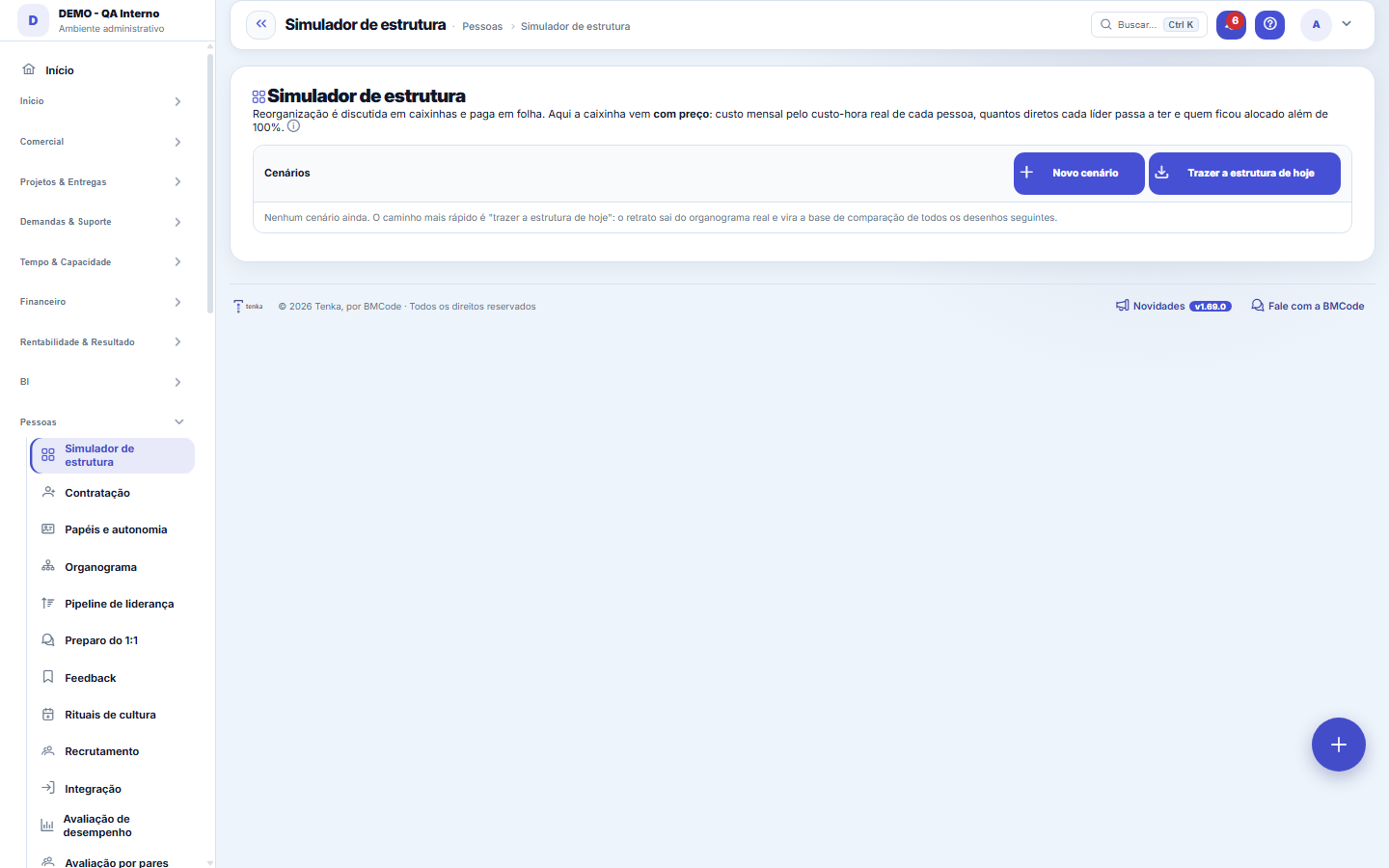
Reorganization is discussed in boxes and paid for in payroll. Here, the box comes with a price tag: real monthly cost, span of control per leader and who ended up allocated beyond 100%.
The screen
The real screen, in the theme you picked above.
What you find on this screen
A portrait of the screen, read from the screen itself — it changes when the screen changes.
Available actions
New scenarioBring in today's structureSaveCloseNew teamMark as today's structureCancelAllocateAllocate person
Form fields
NomeComo o cenário de estrutura é chamado nas comparações.
NºNúmero sequencial por empresa do cenário.
DescriçãoQual desenho de time este cenário testa e por quê.
TipoNatureza do cenário: mudança estrutural, reforço pontual ou corte.
SituaçãoRascunho (estudo), Atual (o retrato de hoje, base de comparação) ou Aprovado (para onde vamos).
Horas por mêsHoras mensais consideradas por pessoa alocada a 100%. Mudar este número muda o custo da hora em todo o cenário.
Start here
What it is for
Build organization scenarios (teams by customer, product, function or mission) and answer with numbers, before executing: how much it costs per month, how many direct reports each leader will have and where there is overlap of people.
Rules
Where the cost comes from
From each person's real hourly cost: salary plus charges, divided by working hours, based on payroll by component. It is the SAME source as profitability and project feasibility — the number has to match across screens, otherwise the simulator becomes opinion with decimal places.
Quando o custo está incompleto
Anyone without posted salary movements enters the scenario at no cost, and the screen warns that the total is UNDERESTIMATED. A number that is declared incomplete is better than a round number nobody knows the origin of. You can enter an estimated hourly cost directly in the allocation.
Sobreposição é o defeito mais caro
On paper the math adds up; in the week, it does not. Someone allocated 80% to one team and 60% to another is at 140% — and it is always that point that breaks the new design in the second month.
Frequently asked questions
Start with today’s snapshot
The "bring today's structure" button builds a scenario from the real org chart: each manager with direct reports becomes a team. Mark it as the current structure and all other designs start being compared against what exists — not against a memory.
Was this article helpful?
In the same module: Simulate before deciding16
Investment AnalysisAssesses whether a project/contract/purchase pays for the cost of capital and creates value. Discounts the pr…Team journeyWho's most engaged: adoption by role, the week's scoreboard, and who needs a nudge.CFO CalculatorsThree everyday financial decisions solved on the spot: how to amortize a loan, compare rates on different bas…CenáriosTeste a decisão antes de tomá-la e veja o efeito no resultado e no caixa.Scenarios (what-if)Compare up to 3 futures side by side: hiring, losing a client, adjusting price — and see the effect on result…Comparar cenáriosCaminhos lado a lado, com o pior caso à mostra.Dossiê de investimentoO parecer que um comitê exigiria, em uma página.Margin ForecastingShows where your margin is heading: projects revenue, cost, and margin for the next 6 months based on the rea…
Tenka Academy
Explore the AcademyStep-by-step learning paths for your industry, inside the platform.