

Profitability simulator
A lab to test price, team and deadline BEFORE committing: you change the numbers and see the effect on the margin, without touching anything real.
The screen
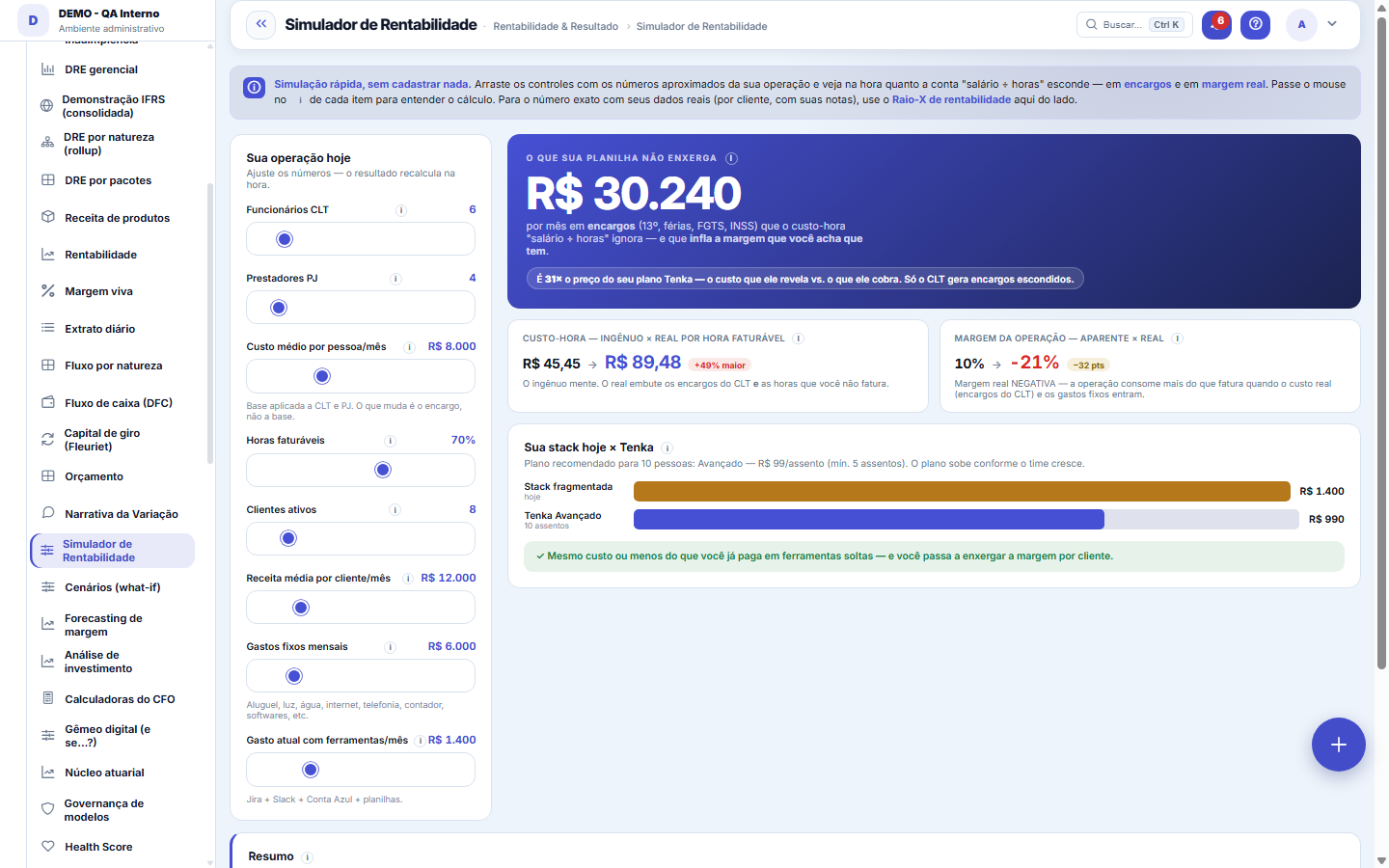
The real screen, in the theme you picked above.
What you find on this screen
A portrait of the screen, read from the screen itself — it changes when the screen changes.
Form fields
Funcionários CLTQuantidade de contratados CLT, sobre cujo salário incidem os encargos trabalhistas.
Prestadores PJQuantidade de prestadores PJ, que não geram encargos trabalhistas.
Horas faturáveisPercentual do tempo do time que vira hora vendida ao cliente.
O que a planilha não enxergaValor mensal de encargos do CLT que o custo-hora por salário simples ignora.
Custo-hora ingênuoSalário dividido pelas horas do mês, sem encargos nem horas não faturáveis.
Custo real por hora faturávelCusto total do time dividido apenas pelas horas realmente vendidas ao cliente.
Diferença entre os custos-horaQuanto o custo-hora real supera o ingênuo, ou seja, o tamanho do erro da conta simples.
Margem aparenteReceita menos salários sem encargos e gastos fixos, dividido pela receita.
Margem realReceita menos salários com encargos e gastos fixos, dividido pela receita.
Pontos de diferença de margemQuantos pontos de margem os encargos consomem entre a conta aparente e a real.
Stack fragmentada hojeQuanto você paga hoje somando as ferramentas soltas por mês.
Tenka no plano recomendadoCusto mensal do plano indicado pelo número de assentos do time.
Start here
What it's for
Answer "does this job add up?" before sending the proposal. The simulator combines what you intend to charge with the real cost of who will execute it, and shows the margin left over.
What this screen answers
Whether the structure you have (or are thinking of having) makes the numbers work: how many people, at what cost, how many billable hours, how many customers and at what average price — and what margin comes out of it.
How to
What this screen answers
It's the easiest to overestimate and the one that moves the result the most. Nobody bills 160 h a month: meetings, proposals, rework and idle time eat between 30% and 50%. Simulate with the number you MEASURE, not the contractual one.
Rules
The cost isn't a guess
The hourly cost comes from payroll with charges — the same one used in project profitability and viability. That's why the result here matches what the operation will show later, and it's not optimistic on purpose.
What this screen answers
The calculation happens entirely in your browser. The screen doesn't fetch your real numbers or save the scenario: closing the page discards everything. Simulate freely — and take the numbers to the Profitability screen when you want the real ones.
A simulation doesn't become a contract
Nothing you test here is recorded as a commitment. This is intentional: simulating is cheap, and the time to get it wrong is now, not at renewal.
A margin that only works in the perfect scenario doesn't work
If the math only stays positive assuming zero rework, a full team and a customer who responds fast, it's going to close negative in real life. Also test the bad-case scenario before deciding the price.
Frequently asked questions
Why is the margin here lower than I expected?
Almost always because the full hourly cost (salary + charges + benefits) is well above the nominal salary, and because coordination and review hours enter the calculation. It's this full number that decides whether the job turns a profit.
Was this article helpful?
In the same module: Simulate before deciding16
Investment AnalysisAssesses whether a project/contract/purchase pays for the cost of capital and creates value. Discounts the pr…Team journeyWho's most engaged: adoption by role, the week's scoreboard, and who needs a nudge.CFO CalculatorsThree everyday financial decisions solved on the spot: how to amortize a loan, compare rates on different bas…CenáriosTeste a decisão antes de tomá-la e veja o efeito no resultado e no caixa.Scenarios (what-if)Compare up to 3 futures side by side: hiring, losing a client, adjusting price — and see the effect on result…Comparar cenáriosCaminhos lado a lado, com o pior caso à mostra.Dossiê de investimentoO parecer que um comitê exigiria, em uma página.Margin ForecastingShows where your margin is heading: projects revenue, cost, and margin for the next 6 months based on the rea…
Tenka Academy
Explore the AcademyStep-by-step learning paths for your industry, inside the platform.