

Public calibration
THE PUBLIC CALIBRATION REPORT — the closing of the thesis. Over the accumulated predictions with a known outcome, it shows, BY MODEL FAMILY (SCORE_CREDITO, PCLD, CHURN…), the model's Brier score against the DUMB RULE (baseline by historical average): the model only justifies itself if it beats the …
The screen
The real screen, in the theme you picked above.
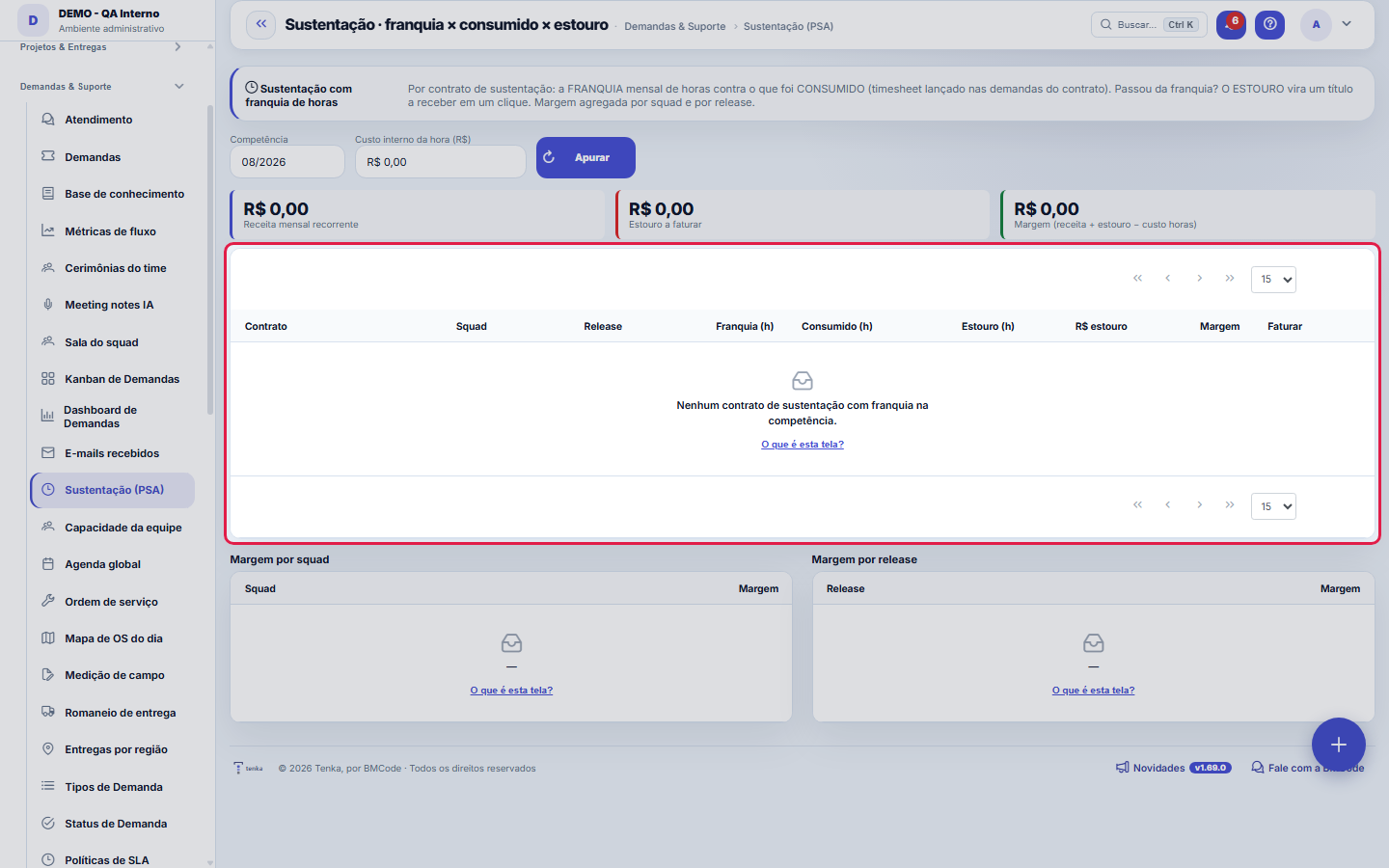
What you find on this screen
A portrait of the screen, read from the screen itself — it changes when the screen changes.
Available actions
CalculateInvoice the overage
The list shows
ContractSquadReleaseAllowance (h)Consumed (h)Overage (h)Overage amountMarginInvoice
Form fields
Nº do contratoNúmero do contrato como o cliente o cita. É por ele que a sustentação é localizada.
ClienteCliente atendido por este contrato de sustentação.
Tipo de serviçoServiço contratado, no vocabulário do próprio contrato.
SituaçãoSe o contrato está vigente, suspenso ou encerrado. Encerrado para de gerar financeiro.
InícioData em que a vigência começou.
FimFim da vigência. Vazio significa contrato sem prazo definido.
Valor mensalQuanto o cliente paga por mês. A soma da lista é a receita recorrente da sustentação.
Recorrente mensalA parcela que se repete todo mês sem depender de consumo de horas.
Horas inclusasBanco de horas mensal já pago no valor. Acima disso a hora é cobrada à parte.
Franquia de horasHoras toleradas antes de começar a cobrança por hora.
Valor da horaValor cobrado pela hora que passa do incluso.
SLA (horas)Prazo de atendimento em horas herdado pelas demandas deste contrato. É o que o cliente cobra.
ResponsávelQuem responde pela conta na sustentação.
Dia de vencimentoDia do mês em que a fatura deste contrato vence.
Start here
A pergunta que esta tela responde
A support contract with a bank of hours is where margin dies silently: the customer pays a fixed amount, consumes a variable one, and nobody notices until the end of the year. Here you see, by period, who consumed what, who exceeded the allowance and how much of that overage can be billed.
What this screen is
Support calculation by contract: the monthly bank of hours against what the team consumed (timesheet logged on the contract's requests). What exceeded the allowance is the overage, and it becomes an automatic receivable in one click. Margin by squad and by release.
How to
How to calculate
Choose the period (month) and enter the team's internal cost/hour, then click Calculate. The cost/hour is the sensitive piece: it is what turns consumed hours into cost and, therefore, into margin — use the fully loaded cost (salary + payroll charges + overhead), not the bare salary.
The usage bar of each contract
Green: within the allowance. Red: exceeded. The Overage column shows the hours beyond the allowance and the amount they represent. An overly generous allowance shows up here too: a contract whose bar is always half full is priced with padding that sales can use.
Margin per squad and per release
The panels below add up the margin by team and by delivered release. A squad with systematically worse margin indicates a poorly distributed portfolio or an underpriced contract; a release with negative margin says that delivery came out expensive — information for the next negotiation.
Rules
Anyone who cannot see amounts cannot open this screen
The Bill overage button generates the charge for the excess hours of that contract — once billed, the line is marked. Not every overage gets charged (relationship, internal error that consumed hours), but every overage must be DECIDED: charge it or absorb it consciously. What kills you is absorbing without knowing.
Frequently asked questions
Three columns, three different ailments
Margin = allowance revenue minus hours consumed × cost/hour. If it looks odd, first check the cost/hour you entered (the most common cause), then whether the month's time logs are complete — unlogged hours artificially inflate the margin.
Which question this screen answers
"How much of the allowance did each support contract consume — and how much overage do I have to bill?" The screen calculates, by period, the hours consumed on each contract (timesheet logged on the contract's requests) against the contracted monthly allowance. What exceeds the allowance is the overage, with its amount calculated at the contract's hourly rate, and it can become a receivable in one click. The margin-by-squad and margin-by-release panels show where support makes and where it loses money.
Was this article helpful?
In the same module: Today's work21
ConversationsThe conversation hub: reply to portal customers, talk to colleagues (internal chat), and in groups. Everythin…Base de conhecimentoOs artigos que respondem antes de o chamado existir — e o número que mostra quantos chamados isso evitou.InboxYour personal inbox to jot down anything without classifying it at the moment of capture.Team ceremoniesWhere the team's meetings are recorded — planning, daily, review and retrospective — with the agreed duration…ChamadosOs atendimentos de sustentação dos seus clientes, com o relógio do SLA, a previsão calculada e as ações da li…Ticket dashboardManagement view of the service desk: SLA, queue by status and type, workload by owner, and resolution time.TicketsDay-to-day operational cockpit: bugs, improvements, support, and tasks — with SLA, owner, contract consumptio…Company documentA certificate, policy, power of attorney or license with the validity at the center: status, notice to the pe…
Tenka Academy
Explore the AcademyStep-by-step learning paths for your industry, inside the platform.