

Extrato diário
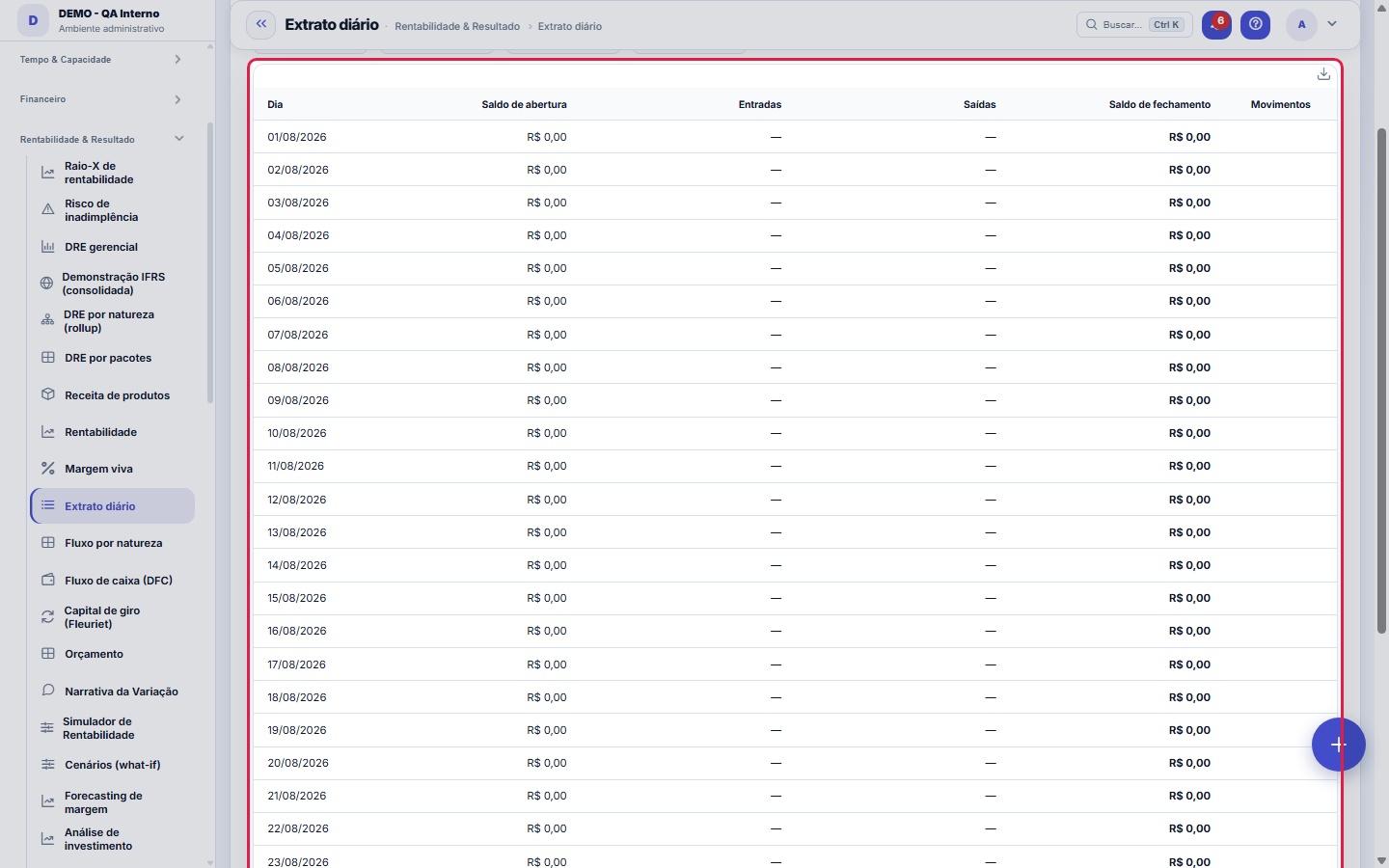
O caixa dia a dia: quanto abriu, quanto entrou, quanto saiu e com quanto fechou — com a lista dos títulos por trás de cada dia.
The screen
The real screen, in the theme you picked above.
What you find on this screen
A portrait of the screen, read from the screen itself — it changes when the screen changes.
Available actions
ExcelPDF
The list shows
DayOpening balanceInflowsOutflowsClosing balanceBank balanceDifferenceEntriesCategoryDescriptionAmountCustomer/Supplier+1
Form fields
DescriçãoO que este lançamento representa, na frase que aparece no extrato.
Baixado emDia em que o dinheiro entrou ou saiu de fato. É esta data que monta o extrato do dia.
VencimentoPrazo combinado para o pagamento, independente de quando foi pago.
Valor baixadoQuanto foi pago ou recebido na baixa. É o valor que o banco confirma.
Valor totalValor do título com juros, descontos e taxas já considerados.
Conta bancáriaConta por onde o dinheiro passou. Sem ela o lançamento não fecha com o extrato do banco.
NaturezaPara onde o valor vai no resultado: qual receita ou despesa ele é.
ClienteQuem paga, quando o lançamento é uma entrada.
FornecedorQuem recebe, quando o lançamento é uma saída.
ConciliaçãoSe o lançamento já casou com a linha do extrato bancário. Conciliado é imutável.
PrevisãoMarca o lançamento que ainda não aconteceu. Misturar previsto com realizado é o erro clássico do extrato.
MoedaMoeda em que o valor foi registrado. Somar moedas diferentes sem converter dá total sem sentido.
Start here
O que esta tela responde
How much came in and went out each day, and what cash closed at. It's the view of the ACTUAL — what has already been settled. The projection of what's still to come lives in the cash flow; here is what happened, day by day, with a running balance.
How to
Opening and closing balance
The first day's opening is the opening balance registered on the accounts plus everything settled before the period. After that, each day's closing is the next day's opening. That's why the balance is "running": it chains together, and you can point to the exact day cash turned.
Saldo do banco e divergência
When there's an imported statement (OFX) for the day, two more columns appear: the balance the BANK states and the difference against our calculation. A green check means it matches. A highlighted difference means a bill probably still needs to be settled — or that one was settled twice.
Clique no número de movimentos
The number in the last column opens the list of bills settled that day, with category, counterparty and account. The sum of that list is exactly what's in the day's columns — it's the proof that the number adds up, and the way to find the wrong entry when it doesn't.
Levar para a reunião
The Excel and PDF buttons export exactly what's on screen, in your language and with the same numbers — including the bank columns, when present. Anyone without permission to see amounts exports with the numbers masked: the file isn't a shortcut around governance.
Filtrar o grupo por unidade, no seletor do topo
In the company selector at the top of the screen there's the group tree: "All" selects every company you have access to, and clicking a unit selects all the companies in that branch at once. The number next to each unit only counts the companies enabled for your user — and the choice made there is already applied on this screen. Important: "all companies" always means the companies you have access to, never the whole group; if a total looks smaller than expected, check with the administrator which companies are enabled for you.
Rules
A day without activity shows up
Days with no entries stay in the list, with a dash in the inflow and outflow columns and the balance repeated. Hiding them would look cleaner and would hide the most useful information in a statement: how many days cash sat still. Use "Only days with activity" when you want the compact version.
Account without an opening balance registered
If any account in scope has no opening balance entered, the screen warns at the top. The running balance stays correct in MOVEMENT, but it starts from what was entered here, not from the real money in the bank. Enter the opening balance on the account record so the two numbers converge.
Scope: company, slice or unit
You can view one company, the header's set of companies, or a node of the group's unit tree. The scope in use is always written on the right, with how many accounts were included — the screen never adds up a set without saying which.
Frequently asked questions
O saldo de fechamento de ontem não bate com o banco. Por onde começo?
Pela diferença mostrada na tela entre saldo do sistema e saldo do banco: abra os títulos do dia e procure o que foi pago e não baixado (ou baixado e não pago). A conciliação bancária casa os dois lados e a diferença some.
Was this article helpful?
In the same module: Cash9
Financial AlertsThe proactive finance radar: rules watch margin, cash, budget, and fixed spend and alert BEFORE the problem g…Month's cashWhat I have, what I will receive, what I will pay and what I close the month with — and what is due this week.Working capital (Fleuriet)The Fleuriet model views the balance sheet through the lens of cash: it separates what is operations, what is…Cards and checksCard fees, receivables advance and the check portfolio — with the cost of each choice in plain sight.360 TowerWhere I am, where I'm going, what I promised, and how much I'm off — the owner's four questions on a single s…Cash flow statementCash flow by the direct method, month by month: how much cash came in and out by activity, with runway, burn,…Flow by natureThe nature × day-of-month matrix — actual up to today, forecast from then on — and the bills due in the month.Help itemAnchor screen of the detail dictionary. Does not appear in the menu.
Tenka Academy
Explore the AcademyStep-by-step learning paths for your industry, inside the platform.