

Kudos
Recognize a colleague in two taps.
The screen
The real screen, in the theme you picked above.
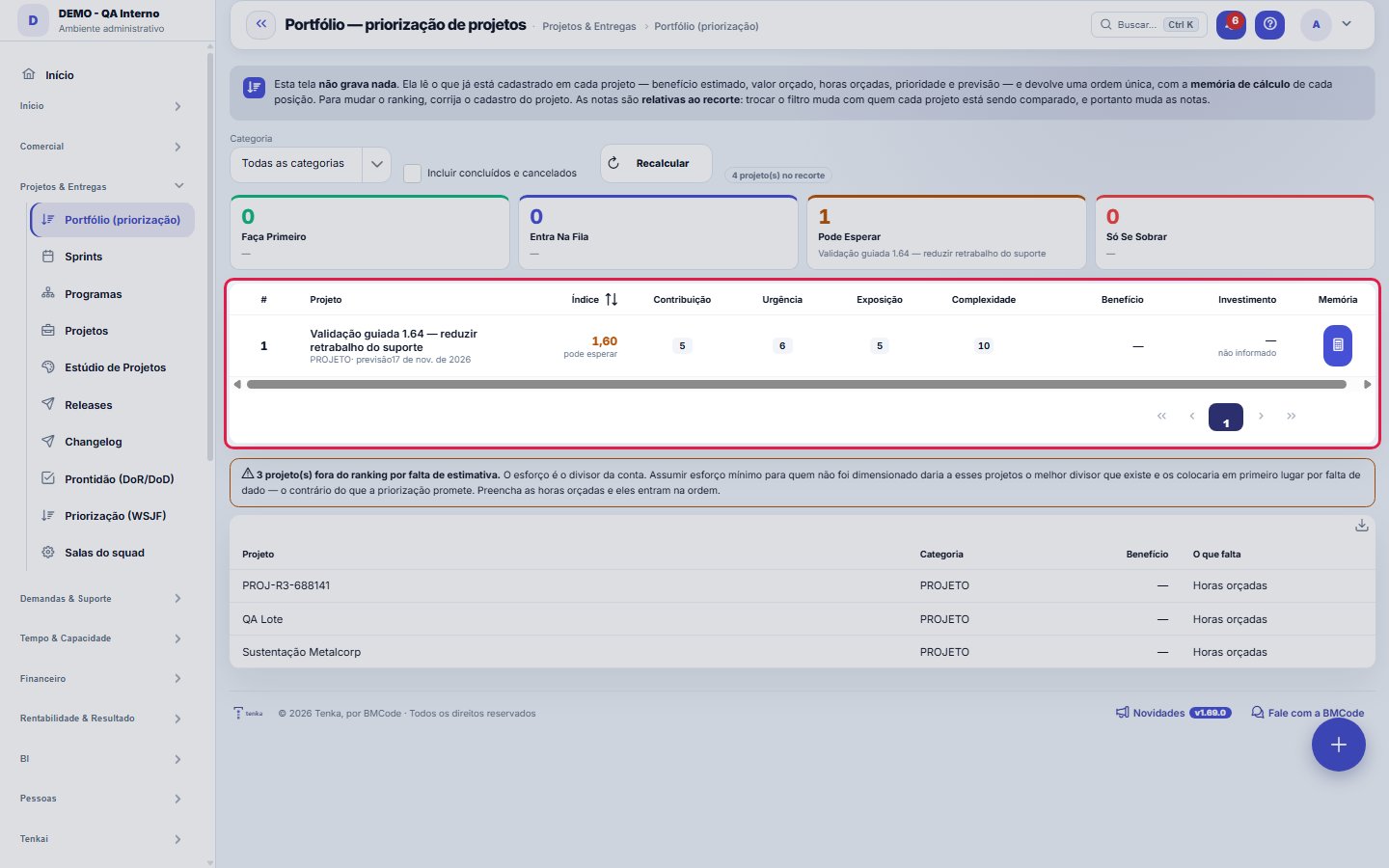
What you find on this screen
A portrait of the screen, read from the screen itself — it changes when the screen changes.
Available actions
Recalculate
The list shows
#ProjectIndexContributionUrgencyExposureComplexityBenefitInvestmentMemoryCategoryWhat's missing
Form fields
ProjetoComo o projeto é chamado nas reuniões de portfólio.
NºNúmero sequencial por empresa. É o número citado em ata e em cobrança de prazo.
SituaçãoEm que ponto o projeto está: proposto, aprovado, em execução, concluído ou parado.
PrioridadePosição na disputa por gente e dinheiro. É a decisão que a tela existe para tomar.
LadoSe o projeto defende o negócio de hoje ou constrói o de amanhã.
HorizonteEm que prazo o retorno aparece. Portfólio só de horizonte curto trava o crescimento.
RiscoNível de incerteza da entrega. Risco alto pede recorte menor antes de aprovar.
Valor orçadoQuanto o projeto vai custar. A soma da lista é o dinheiro comprometido no portfólio.
Benefício estimadoQuanto o projeto promete devolver. Comparado ao orçado, é o que ordena a fila.
Horas orçadasEsforço previsto. A soma mostra se o portfólio cabe na capacidade do time.
Previsão de términoData em que o projeto deveria terminar, do jeito que foi aprovado.
ClienteCliente atendido pelo projeto. Vazio significa projeto interno.
GerenteQuem responde pelo projeto quando o prazo aperta.
ProgramaPrograma que agrupa este projeto com outros que compartilham o mesmo objetivo.
Start here
What this screen answers
Which project starts first, and why. It reads what is already registered in each project and returns a single order, with the calculation breakdown for each position alongside. Priority without an argument is opinion with a number in front; that is exactly what this screen came to take out of the meeting.
How to
What this screen answers
It comes from the project's estimated benefit, compared to the LARGEST benefit in the selection. The project with the largest benefit gets 10; half of it gets 6. A project with no benefit filled in, when the others have theirs, gets the minimum score — and the breakdown says so, so you know it is missing data and not a judgment by the platform.
What this screen answers
The declared priority provides the base (CRÍTICA 10, ALTA 8, MÉDIA 5, BAIXA 2) and the deadline adjusts it: an overdue forecast adds 3, due within 30 days adds 2, within 90 days adds 1, and a deadline more than a year out subtracts 2. The two together because each one alone lies — "ALTA" set two years ago is not urgency.
What this screen answers
It is the budgeted value, INVERTED: the smaller the bet, the higher the score. Between two projects worth the same and costing the same hours, the one that exposes less cash is done first. It is not the same as complexity — a project can be cheap in hours and expensive in licenses.
What this screen answers
It comes from the budgeted hours, compared to the largest effort in the selection. It is the divisor of the calculation: at equal value, the smaller project goes first.
What this screen answers
Small, medium or large according to the share the project takes of the TOTAL investment in the selection: up to 5% is small, up to 20% is medium, above that is large. It serves to read concentration — five large "do first" projects do not fit in the same quarter.
What this screen answers
The calculator in the last column opens the breakdown: one line per criterion, saying where each score came from and how they became the index. It is what you take to the meeting when someone disagrees with the order.
Rules
What this screen answers
Three scores from 1 to 10 add up to the cost of delay — business contribution, urgency and investment exposure. Complexity, also from 1 to 10, divides. It is the same WSJF-lite that the requests backlog uses, on purpose: with two different yardsticks, "does this project come before that request?" would no longer have an answer.
What this screen answers
It appears in a separate block, not at the top. Effort is the divisor: assuming the minimum for a project nobody has sized would give it the best divisor there is and crown it for lack of data — the opposite of what prioritization promises. Fill in the budgeted hours and it enters the ranking.
What this screen answers
Contribution, exposure and complexity compare each project with the LARGEST of what is on the screen. Changing the category filter, or including closed ones, changes whom each project is being compared with — and therefore changes the scores. It is not instability: it is what allows the same yardstick to serve companies of different sizes.
What this screen answers
There is no score to type in here, and that is on purpose. To change the order, correct the project record: estimated benefit, budgeted value, budgeted hours, priority and forecast. If the score were editable on the prioritization screen, the ranking would once again be decided by whoever touches it last.
Frequently asked questions
What this screen answers
An equal index is broken by the smaller bet (less cash exposed), then by the larger benefit and, lastly, by name. The last criterion exists so that the same portfolio always produces exactly the same list.
What this screen answers
Because they do not compete for any resource. Completed and cancelled ones are excluded by default; the marker in the filter bar brings both back when you want to look at the history.
Was this article helpful?
In the same module: Projects and scope4
Project StudioFrom idea to project with AI: describe the initiative in conversation, generate a canvas, feasibility (roles …AI evaluationRuns a fixed set of questions with known answers, several times each, and measures both accuracy AND variance…ProgramsStrategic grouping of projects (portfolio): objectives, linked projects, and a consolidated view.ProjectsThe PMO cockpit: projects with milestones, ceremonies, hours, costs, baseline, and rollup — from kickoff to d…
Tenka Academy
Explore the AcademyStep-by-step learning paths for your industry, inside the platform.