

Opportunity items
Opportunity detail (dictionary anchor).
The screen
The real screen, in the theme you picked above.
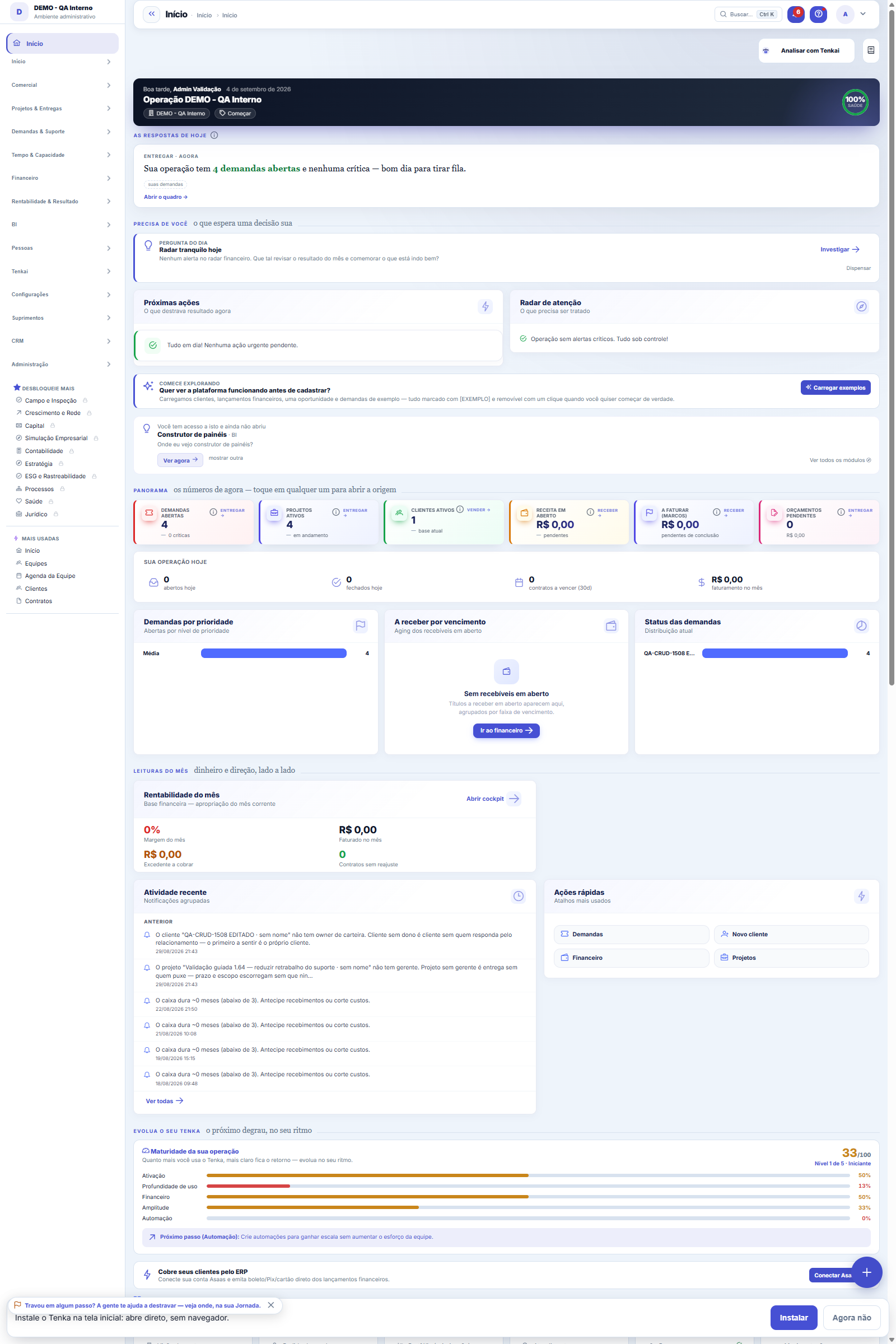
What you find on this screen
A portrait of the screen, read from the screen itself — it changes when the screen changes.
Available actions
Add machineAdd to queueSave setupRefresh
The list shows
ResourceQueue daysSetupIn queueWeek loadMachinesMachine nameType (lockstitch, overlock…)GaugeNeedlesCapacity per dayCell+3
Form fields
Nome
Setor
Capacidadedia
Unidadecapacidade
Ativo
Dhcadastro
Start here
What this panel adds up
For each RELEASED or IN PRODUCTION order, each stage not yet closed loads onto its resource what remains to be produced (planned quantity minus the good quantity already logged). The bucket is the week of the order's DEADLINE. It's arithmetic on what the shop floor has already committed to — there is no forecast, trend or artificial intelligence of any kind here.
How to
Atrasado e Sem prazo são colunas próprias
An order whose deadline has already passed goes to "late"; an order without a deadline goes to "no deadline". Neither is spread across the weeks. Pushing the no-deadline ones into the current week would fill up the present and empty the future — the dashboard would be red today and green later, for the wrong reason.
Standard list and form
The screen became the standard list: search, filters, saved views, columns, export and trash with Undo. Click the record (or New) to open the form, with the detail tabs when there are any.
Machines beyond the loom
Cadastre reta, overloque, estamparia ou rama com a capacidade por dia (e a galga e as agulhas, quando fizer sentido). A fila de cada máquina entra no cálculo do gargalo.
Rules
Capacidade não informada não vira zero, nem chute
A resource with no declared capacity shows the real load and a dash in place of the traffic light. The system could estimate capacity from history — and deliberately doesn't: an invented denominator produces a percentage that looks measured, and a deadline decision made on it goes wrong while looking right. Declare the capacity in the table below the dashboard and the light comes on.
A semana tem 5 dias úteis — uma convenção, não um calendário
The weekly capacity is the daily capacity multiplied by 5, and the dashboard writes that in visible letters in the footer. Tenka doesn't yet have a shop-floor calendar (shifts, holidays, scheduled stoppages), and pretending it did would give a capacity that looks measured and isn't. When there is a calendar, this number will come from it.
O painel diz o que ele NÃO vê
Two counts appear in the footer: how many resources have no declared capacity and how many open orders have the current stage without a resource — the latter consume real shop-floor time and this dashboard doesn't see them. A dashboard that hides its own gap is worse than no dashboard, because whoever reads it believes they're seeing everything.
Resource hourly cost
The resource hourly cost is the work-center rate: labor plus department costs, per hour. It is what values the hours logged on the step. Leave it empty to use the company general hourly cost — the work order flags when that happened.
Machines in the cell, queue per machine and setup per article
In Load × capacity, link each machine to a cell: a cell with fewer machines than people is now measured by its machines. Add articles to each machine queue and register the setup minutes per article; the bottleneck adds the setup of each changeover and shows the week load.
The delivery promise reads the bottleneck
Load × capacity tells from when a new order that goes through the bottleneck can be promised: today plus the bottleneck queue days. In the production order, next to the due date, the same date appears; a due date before it is flagged.
The production bottleneck
O quadro do gargalo junta as células da costura, os teares e as demais máquinas e mostra quantos dias de fila cada um tem — somando o setup de cada troca de artigo. O que tem mais dias é o gargalo: é ele que decide a data que você consegue prometer.
Frequently asked questions
Why is the resource registered on this same screen?
Because this is where its absence shows up. The first reaction of someone who sees "capacity not provided" is to want to declare it right then — sending that person to look for another menu is where the data dies. The record is deliberately minimal: name, department, capacity per day and the unit. No machine calendar, setup or efficiency.
Was this article helpful?
In the same module: Production54
Production log entryOne log entry: who did it, on which production order, how many good pieces, the scrap and the hours. Read-onl…Cell balancingPeople per operation, bottleneck and pieces per day for a style in a cell, from the standard minute of the te…Fashion knowledge baseFormulas, rules and the house way, with the source.Biblioteca de operaçõesAs operações de costura da casa com o tempo padrão por tipo de máquina: monta o roteiro e cota o custo da peç…Bolsa da redeHoras de tear e de facção paradas e sobras (retalho, ponta de rolo, fio parado, encalhe) circulando entre as …Caminho críticoOs marcos da coleção e do pedido, planejado × real: o atraso de um marco empurra a entrega, a tela diz a nova…CertificationA certification (GOTS, OEKO-TEX, ISO 14001…) of the company, a supplier, an item or a lot: issuing body, numb…CertificaçõesO que você consegue provar sobre um fornecedor, um artigo ou um lote — norma, escopo, organismo, número e val…
Tenka Academy
Explore the AcademyStep-by-step learning paths for your industry, inside the platform.