

Rastro do lote
De onde veio e para onde foi um lote: insumos consumidos, etapas percorridas e documentos em que ele saiu.
The screen
The real screen, in the theme you picked above.
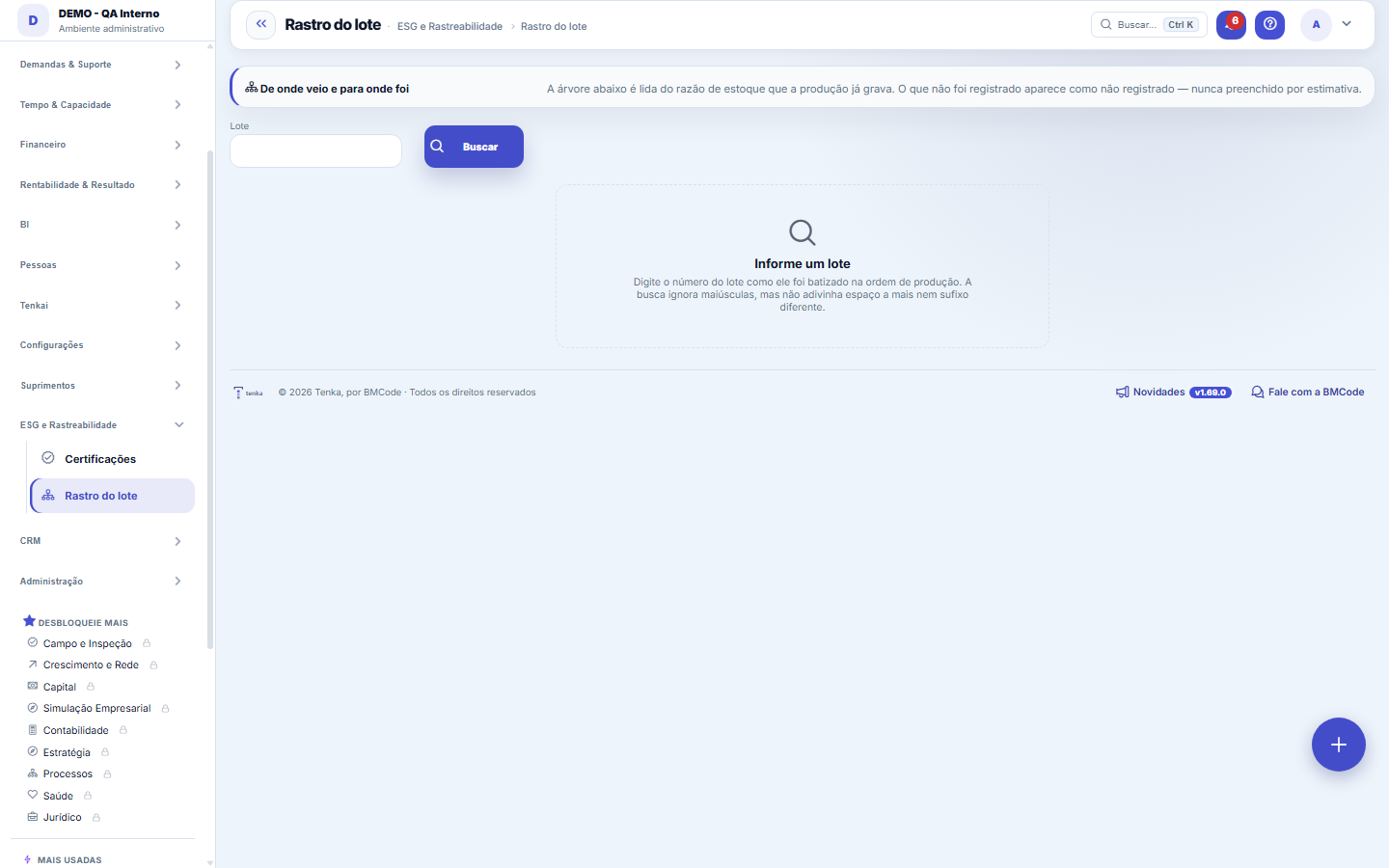
What you find on this screen
A portrait of the screen, read from the screen itself — it changes when the screen changes.
Available actions
SearchOpen a non-conformance for this batchOpen NCRCancelSave
The list shows
OrderItemQuantityScrapStatusCompletionInput batchDateActions#StepGood+6
Form fields
Tipo
Quantidade
Custounitario
Custototal
Data
Origem
Observação
Dhcadastro
Lote
Start here
O rastro é LIDO do razão, não é um cadastro
There is no screen where someone types "lot A came from lot B". The tree on this screen is built from the stock movements that production already records: the order's component issues point to the inputs, the finished goods receipt points to the lot produced. That's why the trail can never disagree with stock — it's the same book, read another way.
How to
O número do lote é texto, e maiúscula importa menos que espaço
The search ignores upper and lower case, but it doesn't guess a lot typed with an extra space or a different suffix. If a lot doesn't show up, check how it was recorded on the production order — that's what names the lot, and the rest of the chain copies from there.
Rules
A movement without a lot shows as NO LOT RECORDED
The lot on the stock movement was born just now. Earlier movements have no lot, and the screen says exactly that, in grey, instead of hiding the row. Hiding it would give the impression of a complete chain that doesn't exist; and a trail that looks complete and isn't is worth less than no trail, because whoever reads it believes it. The badge at the top counts how many consumptions are still in that situation.
Quem declara o lote do insumo é uma pessoa, e é aqui
The automatic component issue knows HOW MUCH went out, not FROM WHICH LOT — only whoever fed the machine knows which roll went in. Copying the knit's lot there would make the trail point the lot to itself, and nothing would raise an error. That's why the row is born blank and the pencil next to it records the declaration, on the very screen where the gap appears: sending whoever saw the gap to look for another menu is where the data dies. Leaving the field blank erases the declaration and returns the row to "not recorded".
Para trás vem do consumo; para frente vem do documento
BACKWARD: the input lots are the stock issues generated by the order that produced this lot. FORWARD: the invoices and orders that carry this lot in their items. They are two different paths because the information lives in different places — and forcing them into one would make the screen invent the missing half.
A não conformidade abre daqui, e o ciclo tem travas
Whoever opens a lot's tree almost always does so because a piece came out wrong — so the button to open an NCR (non-conformance report) lives on this screen, not in a distant menu. The NCR isn't a new table: it's the ticket workflow engine configured with a quality cycle — open, root-cause analysis, corrective action, effectiveness check, closed. Each step requires a comment, and there's no shortcut from opening to closing: without the effectiveness check, "fixed" means "someone touched it", not "the problem stopped". A closed one doesn't reopen either — recurrence is exactly what the audit looks for, and erasing it would hide what matters most. Did it happen again? A new one is opened, pointing to the previous one.
Frequently asked questions
Isto é Passaporte Digital do Produto?
No. The DPP is a regulated European format whose delegated act for textiles hasn't been published yet — the expectation is ~end of 2027, with application after that. What exists here is the lot's internal trail, which is the input for any future passport and, today, a commercial differentiator: showing the customer where the knit came from before anyone requires it.
Was this article helpful?
In the same module: Production54
Production log entryOne log entry: who did it, on which production order, how many good pieces, the scrap and the hours. Read-onl…Cell balancingPeople per operation, bottleneck and pieces per day for a style in a cell, from the standard minute of the te…Fashion knowledge baseFormulas, rules and the house way, with the source.Biblioteca de operaçõesAs operações de costura da casa com o tempo padrão por tipo de máquina: monta o roteiro e cota o custo da peç…Bolsa da redeHoras de tear e de facção paradas e sobras (retalho, ponta de rolo, fio parado, encalhe) circulando entre as …Caminho críticoOs marcos da coleção e do pedido, planejado × real: o atraso de um marco empurra a entrega, a tela diz a nova…Opportunity itemsOpportunity detail (dictionary anchor).CertificationA certification (GOTS, OEKO-TEX, ISO 14001…) of the company, a supplier, an item or a lot: issuing body, numb…
Tenka Academy
Explore the AcademyStep-by-step learning paths for your industry, inside the platform.