

Partner's user
Anchor screen of the detail dictionary. Does not appear in the menu.
The screen
The real screen, in the theme you picked above.
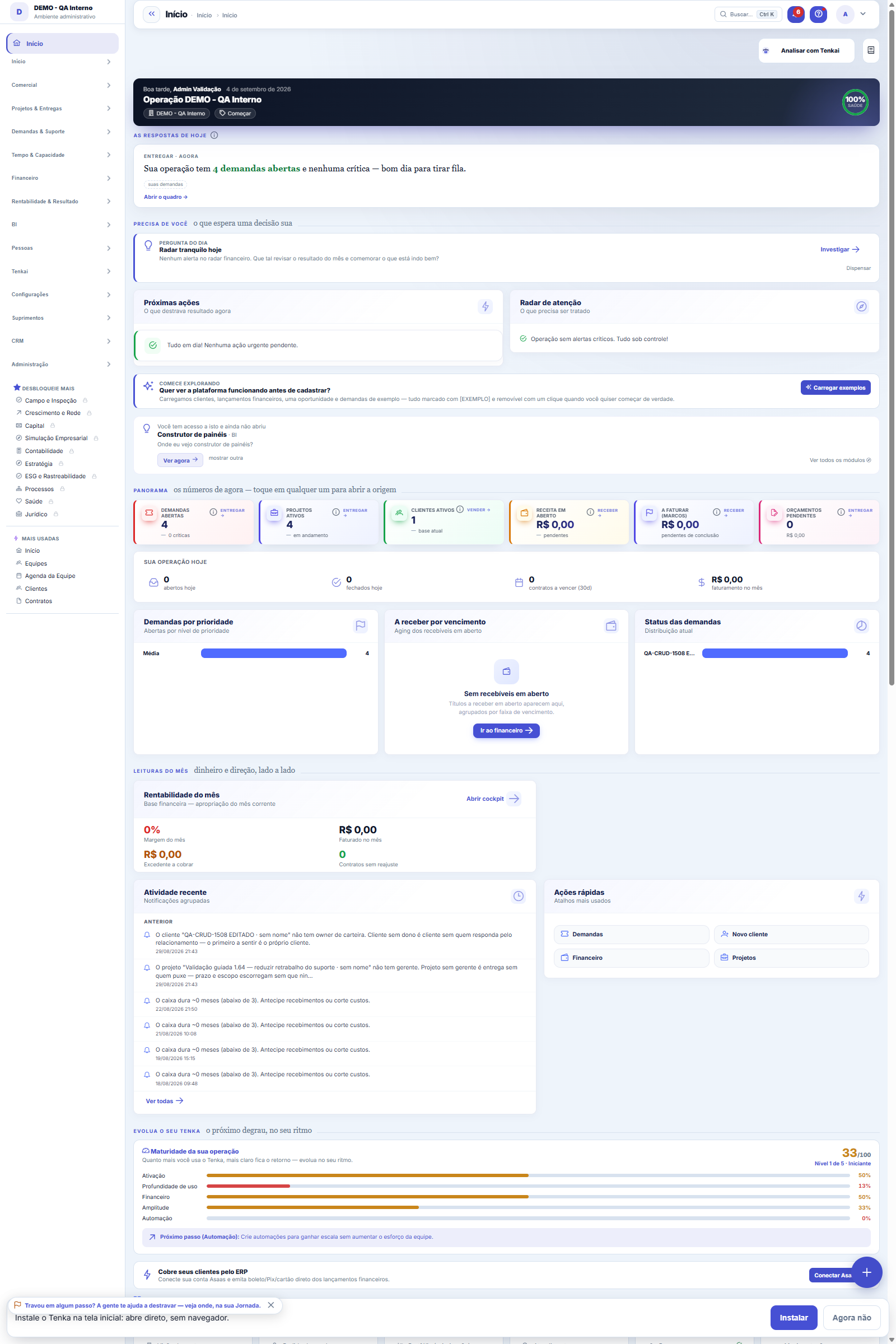
What you find on this screen
A portrait of the screen, read from the screen itself — it changes when the screen changes.
Form fields
NomeO nome do agente (sugerido pelo Tenkai ou escrito por você).
VersãoCada versão guarda o texto que valia naquele dia.
SituaçãoRascunho, publicado (já criou o agente) ou arquivado.
Quando rodaO gatilho em português.
Teto de valorO máximo que o agente pode mexer sozinho.
PedidoO que foi pedido em português.
How to
The dry run and what it proves
"What would you do today?" runs the marked readings against today's data and shows the rows the agent would see, with the source and the link to the proof. It does not save, does not send, does not execute any action and does not appear on the agent's scoreboard. Two important readings of the result: if a source comes back "no data today", the agent's report would come out blank in that part; and if the rehearsal reads nothing, it does not prove that the agent works — the screen says so instead of giving an empty ok.
Standard list and form
The screen became the standard list: search, filters, saved views, columns, export and trash with Undo. Click the record (or New) to open the form, with the detail tabs when there are any.
Rules
Nada é criado a partir do texto
The path has four stops and none is optional: interpret (nothing is saved), review field by field, rehearse if you want, and only then create. The "Create the agent" button is the only one that puts something live. A single button that created directly from the text would be the same path with the review implied — and an implied review is a review that did not happen.
O que a plataforma não sabe fazer aparece escrito
If your request mentions something that does not exist on the platform, it goes to the "this I do not know how to do" list, with the name you used and the reason. It is not silently ignored (you would think you had asked, and the agent would never do it) and it is not swapped for the capability with the most similar name (the agent would do something else, with the authority of having been asked). This list is also useful in another way: it is the record of what customers ask for and the platform does not have yet.
O agendamento sai de regra, não de adivinhação
"Every 5th", "every Monday", "when it is more than 10 days overdue" are read by deterministic rules. What no rule can read is declared in "this part of your request I did not understand" and the agent is born running only on request. It is on purpose: a schedule wrong by one day is an agent that runs on the wrong day forever, without ever raising an error — the routine runs, the report goes out, the customer receives it, just on the wrong date. Things like "first business day" and "end of the month" also appear there, because they depend on the holiday calendar and the length of the month.
Ele nasce em SUGERIR, e as ações nascem desligadas
Writing a request in plain language is not authorization to act. The agent created here writes the suggestion and touches nothing; the actions you authorized come in turned off. Raising the level (to REVIEW or EXECUTE) and turning on the power are separate acts, in Agent Autonomy and in the Transparency Center, where who did it and when is recorded. Editing the request later creates a new version: the previous one is kept, because it is what explains the decisions the agent has already made.
Reverter para uma versão anterior
In the version history, "Revert to this version" republishes the old content as a NEW version — nothing in the history is deleted, and decisions already made remain explainable by the version that made them. Powers added after the target version are deactivated (not deleted): turning them back on is your decision, in the Transparency Center.
Frequently asked questions
How to write the request
Write it the way you would explain it to a colleague who started today: what to check, when, and what you want to receive. Examples that work well: "every 5th, check the contracts without adjustment and send me the list"; "when a receivable is more than 10 days overdue, notify me with the customer's history"; "every Monday, the week's cash summary". The more you use the name the platform uses for the subject (receivables, contracts, orders, tickets, budget), the better the proposal.
Was this article helpful?
In the same module: Digital employees23
Sprint developerAnchor screen of the detail dictionary (allocated devs). Does not appear in the menu.Workflow transitionAnchor screen of the detail dictionary. Does not appear in the menu.Caixa de entrada dos funcionários digitaisO que os agentes estão esperando de você, reunido num lugar só e separado por urgência.Accountant's cockpitThe accountant's dashboard: what's pending, what's due, and what needs approval, per company in the portfolio…My hiresThe marketplace transactions with the flow open: the ones I hired (I am the buyer) and the ones that hired me…Proprietary credit scoreThe credit risk of each drawee (customer) measured by the OBSERVED BEHAVIOR in your own operation — not a bur…Auditor package (SOC 2)The package handed to an auditor: the Segregation of Duties (SoD) matrix with the violations found — profiles…Agent builderFrom a request in Portuguese to the agent: interpret, review the powers one by one, rehearse without executin…
Tenka Academy
Explore the AcademyStep-by-step learning paths for your industry, inside the platform.