

Partner's movement
Anchor screen of the detail dictionary. Does not appear in the menu.
The screen
The real screen, in the theme you picked above.
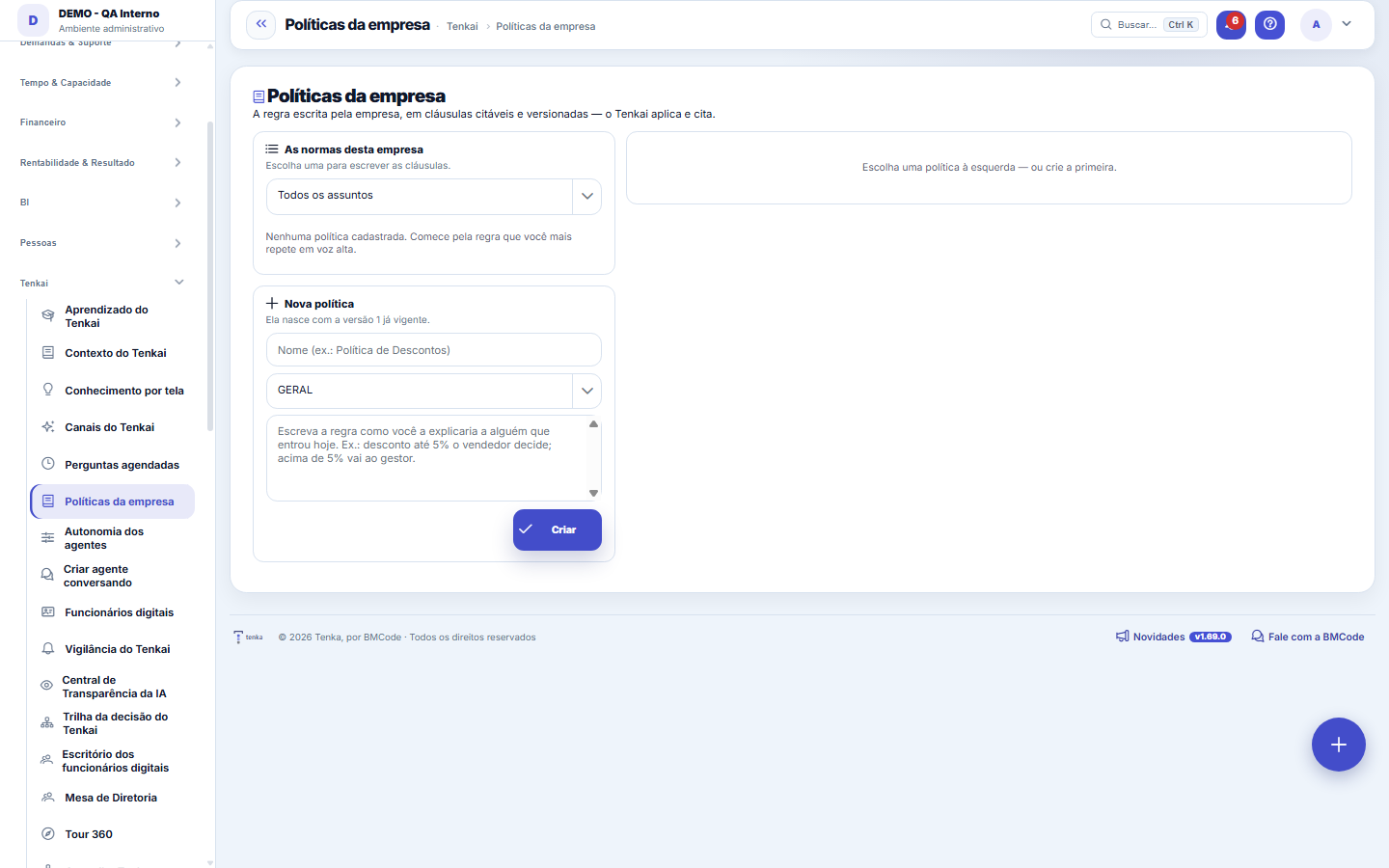
What you find on this screen
A portrait of the screen, read from the screen itself — it changes when the screen changes.
Form fields
Nome*É por ele que a decisão cita a política.
AssuntoDesconto, despesa, compra, cobrança, prazo, crédito ou geral.
Versão vigenteA versão que vale hoje.
AtivaPolítica inativa não entra nas decisões.
DescriçãoPara que serve a norma (o texto da regra mora na versão).
Start here
A rule with versions and clauses
Give the name and subject; a new policy is born with version 1 in force (the text goes in the field on the Data tab). In the tabs: Versions (changing the rule creates a new version — old decisions keep citing the previous one), Clauses (value or percentage range and what it says: approve, refuse or forward) and Simulate (which clause would catch the case).
How to
Test before it takes effect
The simulator takes a case (amount, percentage, has a receipt?) and answers which clause would apply and what it says to do — without saving anything. It's for finding the range that was left uncovered.
Standard list and form
The screen became the standard list: search, filters, saved views, columns, export and trash with Undo. Click the record (or New) to open the form, with the detail tabs when there are any.
Save, browse and undo
Save stores without leaving the form (Ctrl+S); Save and close returns to the list; the header arrows move from one record to the next. Delete sends the record to the list’s trash, from where Undo brings it back.
Rules
Política é norma: a versão anterior não se apaga
Publishing a new version closes the current one and opens the next, in the same transaction. The previous one stays in the history because the question "under which rule did that March purchase go through?" only has an answer if March's rule still exists somewhere.
A cláusula é citada, não interpretada
When Tenkai decides, it says which clause it used and shows its text. If no clause covers the case, it forwards to a person instead of choosing the most similar one — a policy that applies "by similarity" is not a policy.
Isto não substitui a alçada de aprovação
The approval limit still decides WHO signs. The policy says WHY, in the company's vocabulary, and it's the policy that appears in the justification and the trail. The two coexist on purpose.
Frequently asked questions
Como escrever uma política que o sistema aplica
Write the text as you would explain it to someone who started today and, below, break it into clauses: each clause gets a label (§1, §2), the range it applies to (up to 5%, above R$ 200) and what it says to do (approve, forward, refuse).
Was this article helpful?
In the same module: Digital employees23
Sprint developerAnchor screen of the detail dictionary (allocated devs). Does not appear in the menu.Workflow transitionAnchor screen of the detail dictionary. Does not appear in the menu.Caixa de entrada dos funcionários digitaisO que os agentes estão esperando de você, reunido num lugar só e separado por urgência.Accountant's cockpitThe accountant's dashboard: what's pending, what's due, and what needs approval, per company in the portfolio…My hiresThe marketplace transactions with the flow open: the ones I hired (I am the buyer) and the ones that hired me…Proprietary credit scoreThe credit risk of each drawee (customer) measured by the OBSERVED BEHAVIOR in your own operation — not a bur…Auditor package (SOC 2)The package handed to an auditor: the Segregation of Duties (SoD) matrix with the violations found — profiles…Agent builderFrom a request in Portuguese to the agent: interpret, review the powers one by one, rehearse without executin…
Tenka Academy
Explore the AcademyStep-by-step learning paths for your industry, inside the platform.